The Advantages of a Centralized RIP Workflow with CalderaRIP
December 19, 2025
How to centralize my RIP workflow? can I use one computer station to control my printers or is just impossible? These are questions that you ask yourself everyday. Caldera reassures you: You’re thinking right and this is possible. Now that we talked a lot about automation, we think it’s essential to turn to centralization, and give you all the details you need about it.
Printing is producing. It requires you to create a centralized globe where everything is connected. And, no, we are not talking about a “BIG” printshop here. You can build interconnected printing workflows in any printshop size. What matters is: an efficient centralization.
A centralized RIP workflow means that one central (main) computer is in charge of all your printing jobs. This computer prepares the files and then transfers them to many different printers. Instead of having each printer do the work on its own, you can manage everything in one place, making you experience the fastest and most organized printing process.
When centralizing your workflow, you end up with a multitude of benefits that change the way you see your everyday tasks.
Increased Productivity and Operational Efficiency
With CalderaRIP, all printing jobs go through one central system instead of many different computers. This means the same work does not have to be done again and again, and workers do not need to interfere as much. A job is prepared once, and then it can be sent to one or many of your printers whenever needed.
This makes your printing process faster and simpler. Printers spend more time printing instead of waiting; jobs are done sooner, and the team can manage more work without needing to hire more people.
Consistent Output Across All Devices
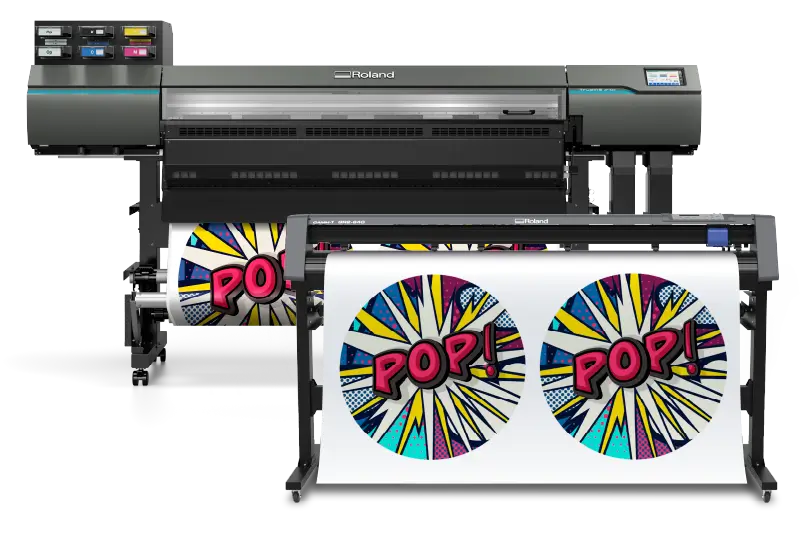
Colors and prints must look the same every single time, especially for brand colors and repeated prints. When you use many printers, it becomes hard to follow the same color pattern.
A centralized CalderaRIP system makes sure that the same print settings are used on all printers. This means the prints will look predictable and repeatable, no matter which printer, material, or location you’re using. This helps you deliver results that meet customer expectations and keep them as happy with the product as possible.
Advanced Color Management from a Single Control Point
CalderaRIP has strong tools that help control colors in printing. Workers can manage color settings, ink use, and printer calibration all in one place. This makes it easier to make sure colors look right and the same on different printers.
By controlling colors from one system, print shops get better print quality and make fewer mistakes.
Yes, this means less wasted ink and materials, and fewer jobs that need to be printed again.
Cost Reduction and Resource Optimization
Using a centralized RIP workflow with CalderaRIP helps printing businesses save money in many ways. Instead of buying and taking care of many different computers and RIP programs for each printer, you can use one main RIP server to control all printers. This means less hardware to buy, fewer software licenses to pay for, and less time spent fixing or updating many systems.
For example, if a print shop has five printers, they don’t need five separate RIP computers. One system can prepare the job once and send it to all five printers. This makes the work easier and faster for the team.
Because everything is managed in one place, you will face fewer mistakes: like wrong colors or wrong settings. CalderaRIP also helps use ink more smartly, so less ink is wasted. All of this lowers the cost of printing each job and helps the business make more profit while still delivering excellent prints.
Remote Monitoring and Job Management
CalderaRIP lets workers see and control all printers from one computer. From this main dashboard, they can check which printers are working, which jobs are still waiting, and if any printer has a problem. They can also start, stop, or move print jobs without standing next to each printer.
For example, if one printer stops working, the operator can quickly send the job to another printer instead of waiting. If a customer needs an urgent print, that job can be moved to the front of the line right away. This can all be done from the same computer, even from another room or location.
Because of this central control and remote access, print shops can fix problems faster, keep printers running more often, and avoid long delays. This is especially helpful in busy print shops where time is important and many jobs need to be finished quickly.
Powerful Automation and Workflow Integration
CalderaRIP has automation tools that help reduce manual work and save time. Features like hotfolders, presets, and job templates allow common print jobs to be set up once and then used again and again. This means workers don’t have to repeat the same steps every time they print something.
For example, if a print shop often prints posters or banners, they can create a preset with the right size, colors, and printer settings. When a file is dropped into a hotfolder, CalderaRIP automatically prepares and sends it to the correct printer without extra steps.
CalderaRIP can also connect easily with other business systems. This creates a simplified process from the moment a customer places an order to the final result. This kind of automation is helpful for print shops that handle many small or customized jobs, because it moves fast while reducing mistakes and saving time.
Scalable and Future-Proof Production
When your business grows, you need to grow how it works, too. CalderaRIP uses a central system, which makes it easy to add new printers, new types of printing, or even new production locations without altering how everything already works.
For example, if a print shop buys a new printer or opens another location, they can connect it to the same CalderaRIP system. The team can keep using the same settings, tools, and workflows they already know. This saves time and avoids confusion.
Whether the business starts printing things like clothing, packaging, or industrial products, CalderaRIP is flexible enough to handle it. This makes it a smart choice for print shops that want to grow over time without making their work more complicated.
Why Choose CalderaRIP for a Centralized Workflow?
CalderaRIP is a powerful, hardware-independent RIP solution designed for professional print environments. By centralizing job processing, color management, and printer control, CalderaRIP empowers print service providers to produce higher-quality output, reduce costs, and operate more efficiently, all from a single, unified platform.
Related articles