5 Common Misconceptions About Direct-to-Film Printing (DTF)
June 30, 2026
Digital textile printing has become one of the most important production businesses, and it keeps evolving at a remarkable pace. With the rise of new technologies in the field, businesses have found different ways to produce custom apparel, promotional products, sportswear, workwear, and fashion collections.
Direct-to-Film (DTF) printing is one of these innovations that is helping print professionals scale their businesses in a very profitable way. It has emerged as the most discussed method in textile printing.
Many businesses are now investing in DTF printers, DTF transfers, and advanced workflow solutions to be able to manage this increasing demand for high-quality and accurate DTF prints.
But despite the high demand surrounding DTF printing, it remains a widely misunderstood business. While scrolling, you have probably already noticed the questions printers ask in social media groups, forums, or industry discussions, along with the conflicting opinions on DTF. Arguments vary from one person to another. Some of them claim that DTF printing is now considered a replacement for every other technology. Others are convinced that it’s only suitable for small print shops. On the other hand, some assume that they only need to buy a DTF printer to launch a successful DTF business.
But the truth is different and far more nuanced. Like any other printing technology, DTF printing has its own advantages, limitations, and best practices. When you get to know and understand the reality behind this DTF hype, you will be able to make more informed decisions and build a sustainable production workflow.
Misconception 1: DTF Printing Is Just Another Passing Trend
Every time a new technology hits our daily life, we often let skepticism make us question its long-term future.
DTF printing, since its appearance, has been considered a technology that would enjoy a brief period of popularity, then slowly start fading away. However, its recent and remarkable growth suggests the opposite.
And the reason it has reached this stage is because it solves real production challenges.
Traditional garment decoration methods often require compromises. Some technologies perform exceptionally well on cotton but struggle with polyester. Others offer great durability but require significant setup time. Certain methods are highly efficient for large runs but less economical for short-run production.
DTF printing, in this case, fulfills all the requirements and offers a highly flexible solution capable of decorating a wide variety of fabrics.

DTF transfers can be applied to cotton garments, polyester apparel, cotton-poly blends, sportswear, workwear, tote bags, caps, and accessories, as well as performance fabrics.
By offering this versatility, printers can finally expand their product propositions without having to increase their equipment. What has also accelerated DTF adoption is the rise of e-commerce. Now, customers expect customized products, shorter lead times, and lower minimum order quantities. And DTF printing is the best option to meet their demands and support such a production environment.
So, instead of considering it a mere passing trend, you might start considering its advantages.
It is becoming a solid part of modern textile printing. Now, the real and most profitable question is how businesses can integrate DTF printing effectively into their broader production strategies.
Misconception 2: DTF Printing Produces Lower-Quality Prints Than Other Technologies
DTF printing is not just a trend; it is also a printing method that sacrifices quality for convenience. This second misconception is the result of comparisons with poorly configured systems or low-quality transfer processes. In reality, professional DTF production can achieve exceptional image quality.
Modern DTF workflows are capable of producing:
- Vibrant colors
- Fine text reproduction
- Detailed graphics
- Smooth gradients
- Sharp edges
- Strong opacity on dark garments
When properly managed, DTF prints can meet the quality standards expected in premium apparel decoration.
The key factor is understanding that print quality depends on much more than the printer itself.
A professional DTF workflow involves multiple components working together:
Color Management
Accurate color reproduction is essential for brand consistency and customer satisfaction. Without proper color management, businesses often experience inconsistent results between production runs, leading to wasted materials and reprints.
RIP Software
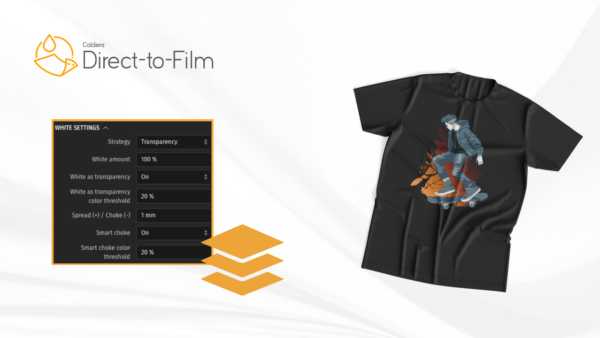
Advanced RIP software helps optimize color output, manage white ink layers, improve image processing, and maximize production efficiency. The difference between an average DTF print and an exceptional one often lies in the software driving the production process.
Workflow Consistency
Consistent workflows reduce variability and improve repeatability across jobs.
As production volumes increase, workflow management becomes increasingly important for maintaining quality standards.
Equipment Calibration
Regular calibration ensures that printers continue producing predictable results over time.
Successful DTF providers understand that quality is not created by hardware alone, it is the result of a well-managed production environment.
Misconception 3: DTF Printing Is Easy and Requires Minimal Expertise
DTF printing has gained popularity due to its relatively accessible and straightforward production process.
When you first discover DTF printing, the workflow appears simple:
- Print the design onto film.
- Apply adhesive powder.
- Cure the transfer.
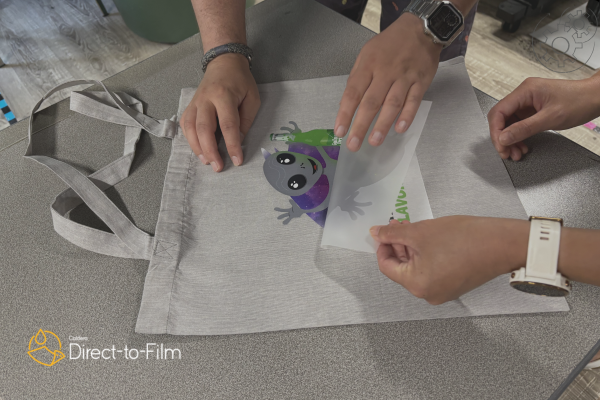
- Heat press it onto the garment.
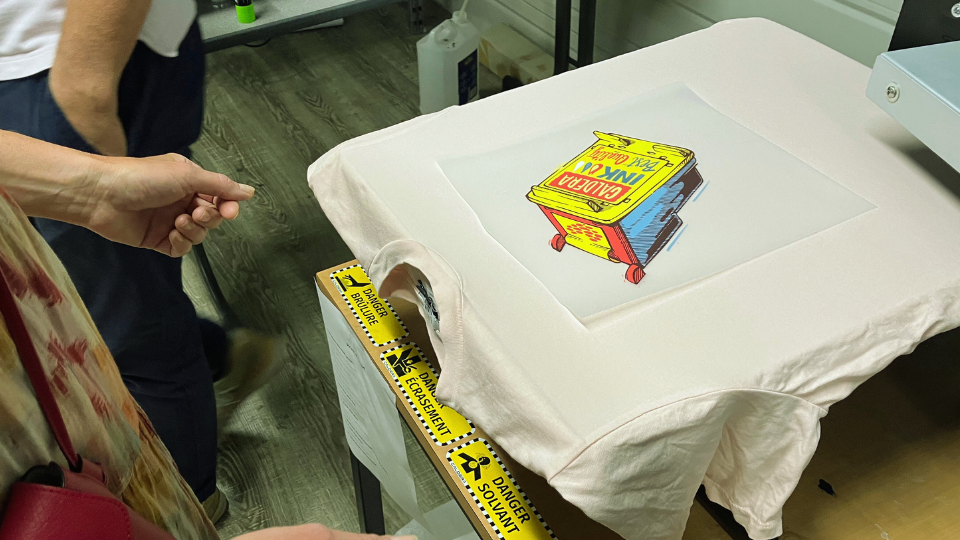
Now, because the steps look so straightforward, you might think DTF is the easiest textile printing method. The reality is quite different. While the process itself is easy to learn and follow, achieving professional, scalable production requires much more than simply mastering the basic steps.
You might be asking yourself how that’s possible. The answer is that successful DTF production requires expertise, careful workflow management, and the right tools. To achieve consistent, high-quality results, you’ll need to find the right DTF solutions and continue learning.
This is necessary because several factors influence the final print quality:
Artwork Preparation
Poorly prepared artwork can create printing issues, reduce image quality, and increase production costs.
Design optimization remains a critical step in any professional workflow.
White Ink Management
White ink is one of the most important elements in DTF production.
Proper white ink management directly affects opacity, color vibrancy, and transfer durability.
Production Efficiency
As order volumes grow, businesses quickly encounter operational challenges.
Manually processing jobs may be manageable when handling only a few orders per day, but production bottlenecks emerge as volumes increase.
Workflow Automation
Automation becomes essential for:
- Job preparation
- File management
- Color processing
- Print queue management
- Nesting optimization
- Production scheduling
What defines a profitable DTF printing business? It isn’t necessarily the newest printers a company has acquired, but the workflows it has adopted. An efficient, future-ready workflow is what enables businesses to scale production, maintain consistent quality, and remain competitive as demand grows.
Misconception 4: DTF Printing Will Replace Every Other Textile Printing Technology
Once it became clear that DTF printing was more than just a passing trend, it began to be compared with other textile printing technologies. However, DTF printing does not, and will not replace other garment decoration methods. Each printing technology has its own strengths and limitations, making it better suited to specific applications and business needs within the textile industry.
Screen Printing
There is no doubt about this. Screen printing remains one of the most effective solutions for high-volume production. Large orders often benefit from the speed and cost advantages of screen printing.
Direct-to-Garment (DTG)
DTG continues to excel in certain applications, particularly where soft hand feel and direct fabric integration are priorities.
Dye Sublimation
For polyester-based products, dye sublimation remains unmatched in many performance apparel and promotional product applications.
DTF Printing
DTF printing is a highly versatile method that excels in this area. It has gained popularity because it allows users to decorate multiple fabric types within a single workflow. This makes it an attractive option for print providers handling diverse product ranges.
The future of textile printing is unlikely to be dominated by a single technology. Instead, successful print providers are increasingly adopting hybrid production environments that combine multiple technologies to maximize flexibility and profitability.
The most competitive businesses choose the right technology for each application rather than forcing every job through the same production process.
Misconception 5: Buying a DTF Printer Is Enough to Build a Successful Business
This may be one of the most costly misconceptions. The rapid growth of the DTF market has led some businesses to believe that purchasing a printer alone guarantees success. Unfortunately, hardware is only one part of a much larger system.
Professional DTF production depends on a complete ecosystem that includes:
- RIP software
- Color management
- Workflow automation
- Production monitoring
- File preparation
- Equipment maintenance
- Operator training
Without these elements, businesses often face issues such as inconsistent colors, excessive ink consumption, production delays, material waste, reprints, and customer complaints. As production scales, these inefficiencies become increasingly costly. This is why experienced print providers focus on optimized workflows rather than hardware alone.
A strong workflow solution helps businesses increase throughput, improve color consistency, reduce waste, simplify production, and scale more efficiently. In many cases, workflow optimization delivers a higher return on investment than purchasing additional hardware.
What Does the Future of DTF Printing Look Like?
The conversation around DTF printing often focuses on printers, inks, films, and transfer powders. While these components are important, the future of DTF lies elsewhere. As competition increases and customer expectations continue to rise, businesses will increasingly differentiate themselves through:
- Automation
- Color accuracy
- Workflow efficiency
- Production scalability
- Quality consistency
Solutions like Caldera Direct-to-Film can help you handle this effectively. Rather than focusing only on output devices, Caldera’s RIP for DTF printing and production tools are designed to centralize control, improve repeatability, and streamline the entire DTF production process.
DTF printing has earned its place as one of the most significant innovations in modern garment decoration.
However, misconceptions can lead businesses to make poor decisions, unrealistic expectations, or costly investments.
The reality is that DTF is neither a miracle solution nor a temporary trend. It is a powerful, versatile technology that delivers outstanding results when supported by the right workflow, color management strategy, and production expertise.
By understanding the truth behind these common myths, print service providers can make smarter decisions, improve operational efficiency, and unlock the full potential of DTF printing.

Related articles