CalderaRIP Supports the EFI VUTEk M3h X for High-Performance Large-Format Printing
November 26, 2026
CalderaRIP provides professional RIP software support for compatible wide-format printing systems, including the EFI VUTEk M3h X. This compatibility is important for print service providers looking to combine advanced hybrid LED printing technology with a professional software workflow for preparing, managing, and optimizing print jobs.
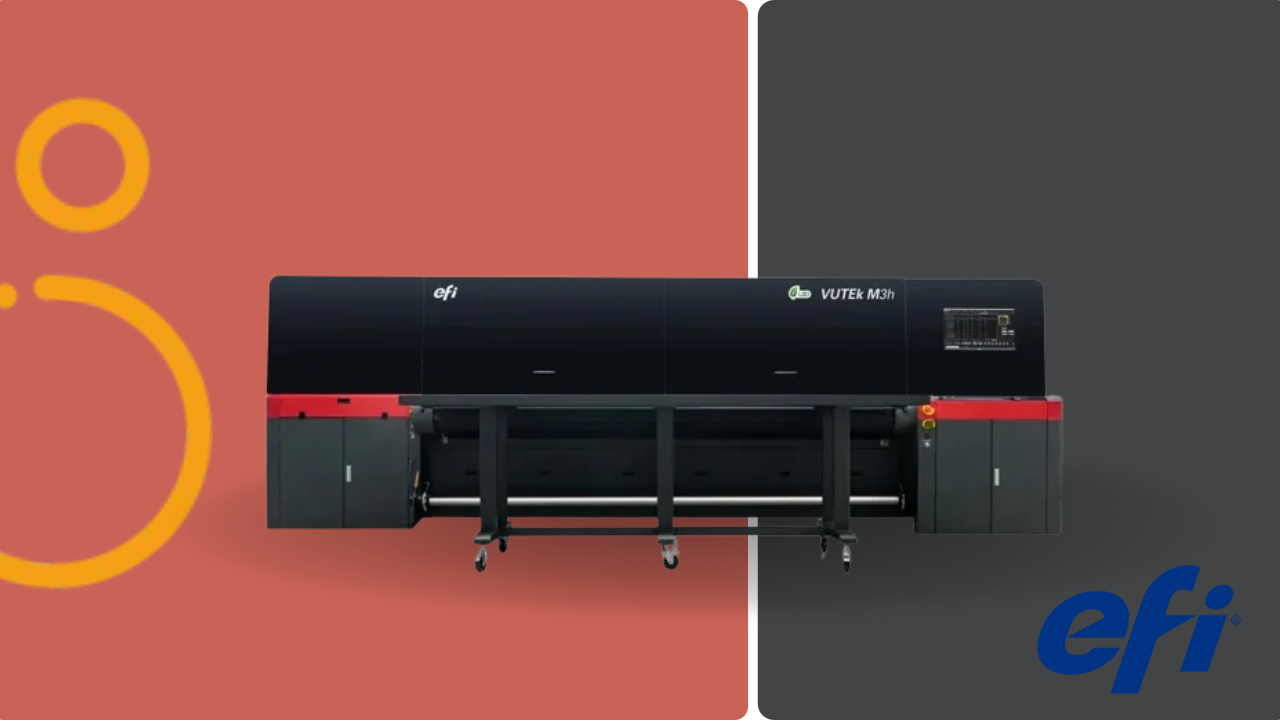
Developed for demanding commercial printing environments, the EFI VUTEk M3h X combines high productivity, versatile media handling, and high-resolution imaging in a single hybrid printing platform.
Understanding the EFI VUTEk M3h X Printer
The EFI VUTEk M3h X is a superwide hybrid flatbed and roll-fed LED UV printer designed for sign and display production. The printer offers a maximum print width of 126 inches (3.2 metres), productivity of up to 4,219 square feet per hour (392 m² per hour), and resolution of up to 3,000 dpi. Its standard color configuration includes CMYK and two white ink channels. EFI VUTEk M3h X official specifications.
One of the system’s principal advantages is its hybrid design, which supports printing on both rigid and flexible substrates. This versatility allows print providers to handle different types of commercial projects without requiring separate equipment for every media format.
CalderaRIP Support for the EFI VUTEk M3h X Driver
CalderaRIP plays an important role in the digital printing workflow by processing artwork and converting digital files into printable data for supported devices.
For businesses operating the EFI VUTEk M3h X, CalderaRIP compatibility offers a way to integrate the printer into a professional production workflow.
Depending on the software version and device configuration, available functions may include print job preparation, color management, media configuration, and other production-related controls.
High-Quality Imaging and Advanced Color Management
The EFI VUTEk M3h X supports resolutions of up to 3,000 dpi and uses 7-picolitre and 14-picolitre grayscale printheads to deliver detailed output. Its advanced printhead positioning technology is designed to improve droplet placement and image precision.
When used with an appropriately configured RIP workflow, the printer can be incorporated into a color-managed production process. Suitable media settings, color profiles, and calibration procedures help operators work toward predictable output across different jobs and substrates.
Hybrid Printing for Rigid and Flexible Materials
A major advantage of the EFI VUTEk M3h X is its ability to accommodate rigid and flexible media within one printing platform. It supports materials up to 3.2 metres wide and up to 5.08 centimetres thick, making it suitable for a variety of sign and display applications.
Rigid substrates can be used for applications such as retail signage, promotional boards, exhibition panels, and interior graphics. Flexible media supports applications such as banners, roll-fed graphics, and other large-format printed materials.
This flexibility allows print businesses to diversify their services and respond to a wider range of customer requirements. With compatible RIP software, operators can prepare files and manage the appropriate settings for supported production configurations.
The ability to switch between flatbed and roll-to-roll printing also helps businesses make better use of their equipment, particularly when their production schedules include different media formats and job sizes.
Supporting High-Volume Print Production
The EFI VUTEk M3h X is designed for production environments where throughput and turnaround times are important. EFI specifies maximum productivity of up to 392 m² per hour, equivalent to approximately 4,219 square feet per hour or 105 boards per hour under the stated production conditions.
The system also features continuous-print capabilities, multi-queue functionality, and support for multi-up production. These features are designed to help operators process multiple jobs efficiently and reduce unnecessary interruptions during production.
A compatible RIP workflow is an important part of this process because jobs must be prepared correctly before they reach the printer. Effective file preparation, appropriate output settings, and an organized production queue can help businesses coordinate their workload.
For commercial print providers handling high volumes of signage and display graphics, combining suitable RIP software with the printer’s production capabilities can help establish a more efficient working environment.
White Ink, Multilayer Printing, and Premium Applications
The EFI VUTEk M3h X includes CMYK printing with two white ink channels and supports multilayer printing of up to nine layers in a single pass, according to EFI’s product information. These capabilities expand the range of applications available to print providers.
White ink is particularly useful when printing on transparent or colored substrates, where a white layer can help improve opacity and visual contrast. Multilayer printing can also support specialized graphics and backlit applications that require carefully arranged ink layers.
An optional clear ink capability provides additional opportunities for producing selected visual effects, including enhanced image areas and decorative finishes.
For businesses serving retail, advertising, exhibitions, and commercial interiors, these capabilities can help create more specialized products and differentiate their services from standard printing offerings. The precise workflow and feature availability should be confirmed for the printer and software configuration being used.
LED UV Technology and Production Flexibility
LED UV curing is another important feature of the EFI VUTEk M3h X. The technology is designed to cure ink during the printing process while supporting a broad range of compatible substrates.
EFI highlights potential operational benefits that include lower energy consumption, reduced waste, and lower volatile organic compound emissions compared with certain alternative printing technologies. Actual environmental and operating benefits depend on the application, equipment settings, production conditions, and materials used.
For print providers, the ability to work with different substrates and manage diverse applications on one platform can help expand production options. When combined with a compatible RIP workflow, this flexibility can support the preparation and management of a broad range of print jobs.
Compatible RIP software helps connect digital artwork preparation with the printing process, supporting workflow organization and the management of relevant output settings. For businesses producing signage, retail graphics, exhibition displays, and specialized visual materials, the combination of suitable software and advanced printing equipment can provide a flexible foundation for commercial production.
Related articles